
Everything we do, and nothing we do not
A Homemaker and Companion Services provider works to a scope the Florida Agency for Health Care Administration defines precisely. That is useful for you: you can read exactly what a visit includes, and what it never includes, before you ever pick up the phone.
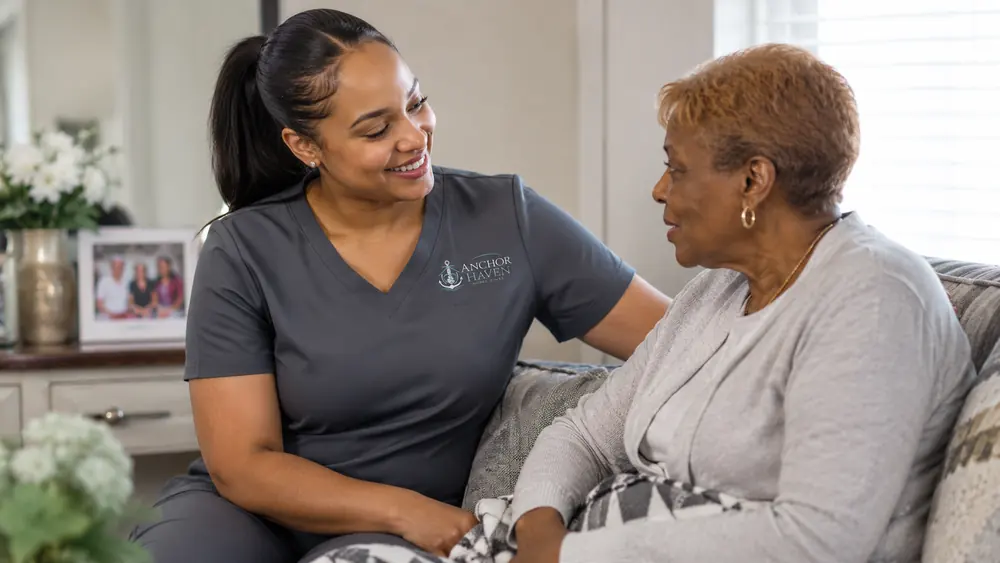
Companionship and conversation
The reason most families call is not the housework. It is that a parent is spending too many hours alone, and everyone can feel what that is doing.
A companion visit is time spent together. Talking, going through photographs, a card game, a walk to the mailbox, a trip out for coffee. A caregiver who is present also notices things: that the mail is piling up, that the fridge looks the same as last week, that something in the mood has shifted. Those observations go in the visit record and, when they matter, into a call to you.
- Conversation, reading aloud, games and shared hobbies
- Accompanying trips, outings and social visits
- Safety supervision, and clearing hazards within scope
- A written record of every visit, kept in the client file
Light housekeeping, laundry and linens
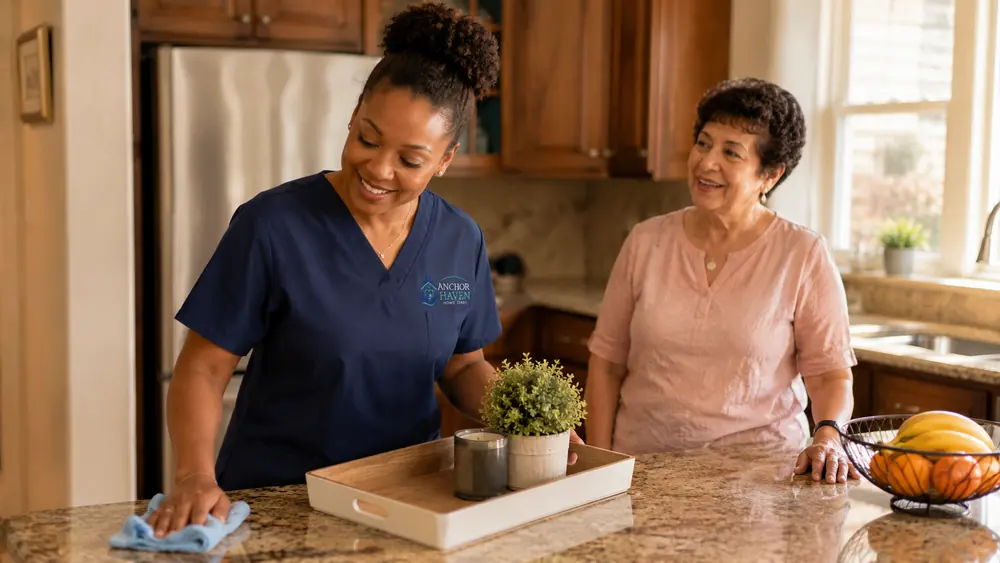
Homemaker services are the household chores that keep a home liveable when doing them yourself has become too much. We work from the task list in your service plan, using the cleaning products already in the house and following the label on every one of them.
- Tidying living areas, kitchen and bathroom surfaces, taking out the trash
- Washing, drying, folding and putting away laundry
- Changing bed linens and making the bed
- Keeping walkways clear and reporting anything unsafe
This is light housekeeping, not a deep clean or a maintenance service. We do not climb ladders, move heavy furniture or take on repairs.

Meal planning and preparation
Planning the week, shopping for it, cooking it, and serving it at the table. We follow any dietary instructions written into the service plan, and we keep to safe food handling: raw and ready-to-eat kept apart, produce washed, leftovers refrigerated promptly.
We serve the meal. We do not feed a client by hand, which is personal care.
Errands, shopping and appointment rides
Groceries and household items, picked up on your behalf or together with you. Rides to the doctor, the pharmacy, the hairdresser or a friend's house, with the caregiver waiting and available through the appointment.
Every driver holds a valid license and current auto insurance, both verified by the office before a single trip and re-checked as they expire. Seat belts on, phone down.
When a client hands over cash for shopping we bring back every receipt and the change, and reconcile it with them on the spot.
A client needs to be able to get in and out of the vehicle without hands-on help. We cannot lift or transfer anyone, and we will tell you before the first trip if that is going to be a problem.
Medication reminders, and only reminders
This is the boundary families ask about most, so here it is in plain terms. A caregiver can tell your mother that it is four o'clock and time for her tablets. That is the whole of it.
Your mother, or the person legally authorized to act for her, obtains the medication, sorts it and takes it. Our caregiver does not touch the bottle, the box or the organizer. We do not open, sort, pour, crush or set anything up, we do not put a tablet in a hand, and we do not advise on doses, timings or side effects. Under s. 400.462, F.S., all of that is administering medication, and administering medication is personal care.
What we do instead is watch and tell you. If a caregiver notices doses being missed, or confusion about what has already been taken, that goes to the office the same day and the office calls you. When someone can no longer manage their own medication safely, we say so and help you find a licensed provider who can take it on.


Dementia companionship
For a client living with Alzheimer's disease or another form of dementia, the single most useful thing we can offer is sameness. The same caregiver, arriving at the same time, starting the visit the same way.
Within that, the work is conversation on the client's terms, redirection when a moment turns anxious, keeping the household routine going, and steady safety supervision. It is patient, unhurried, non-medical company.
It is not hands-on personal care, and it is not clinical dementia care. If bathing, dressing or transfers become part of what the day needs, we will tell you plainly and refer you on.
What is not included, and who to call instead
Outside our registration
- Bathing, showering, dressing, grooming, toileting or incontinence care
- Transfers, lifting, and hands-on help with walking or balance
- Feeding by hand
- Handling, sorting or giving any medication, including injections and eye drops
- Vital signs, wound care, catheter or ostomy care, blood sugar checks
- Nursing, physical, occupational or speech therapy
- Any clinical judgement about a health condition
Where those belong
Personal care and skilled care are provided by licensed home health agencies and nurse registries, which hold a different license from ours and are regulated accordingly.
Plenty of families use both: a licensed agency for the personal care, and us for the hours in between when what is needed is company, a cooked meal and a clean kitchen.
Tell us what the full picture looks like on the first call. If we are only part of the answer we will say so, and we will help you find the rest of it.
How the money works
Private pay, billed by the hour
We are a private-pay agency. Rates depend on the schedule and the county, so call the office for current numbers rather than trusting a figure on a web page.
The rate is in writing before you start
Your service agreement states the services, the schedule, the rate and the payment terms, and you sign it before the first visit. You will never be charged a rate or a fee that was not disclosed to you in advance.
Invoices you can check line by line
Every invoice itemises the dates, the hours and the rate, taken from the caregivers' visit records. Query anything and we pause collection on that item while we check it against the record, then put it right in writing.
Not sure which of this you need?
Most families are not, at first. Tell us about the week as it actually goes and we will help you work out what would take the pressure off.